
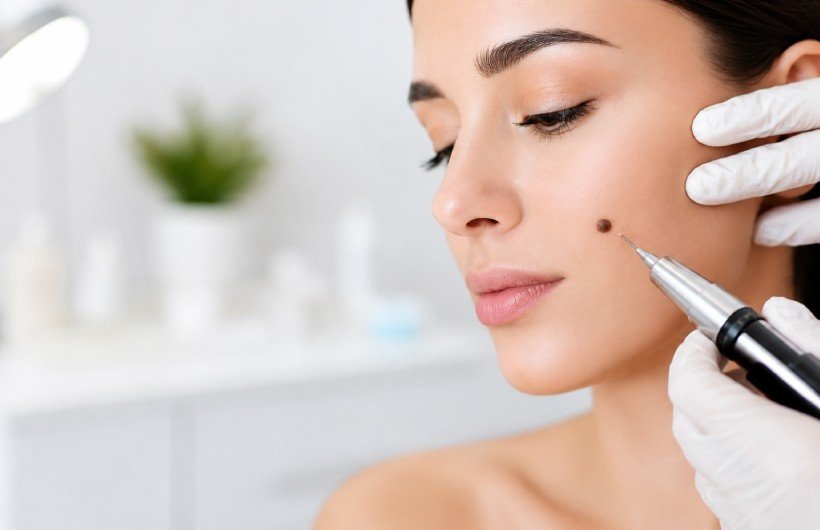
Mole Removal Treatment: Cost, Methods, and Is It Safe & Permanent?
Most of us have a few moles on our skin, and most of the time, they have nothing to worry about. But sometimes a mole sits in an awkward spot, keeps catching on your clothes, or you don’t like the way it looks. Other times, a mole changes shape or color, and that change makes you want it checked. Whatever your reason, you are not alone in wondering about mole removal treatment in Ahmedabad. At Face Multispecialty Cosmetology Hospital in Ahmedabad, we help patients understand their options first so that they can make a safe and confident choice.
In this guide, we will walk through what moles are, the types you might have, how removal works, what it costs, and how safe and permanent the results really are.
What Exactly Is a Mole?
A mole is a small cluster of skin cells called melanocytes. These cells give your skin its color. When they group in one spot, you get a mole. Most people have 10 to 40 moles on their bodies, and almost all of them are completely harmless.
Moles can be flat or raised. They can be brown, black, pink, or even skin colored. They can show up anywhere on your face, your back, your arms, or even your scalp. Genetics, sun exposure, and hormonal changes all play a role in how many moles you have and when new ones appear.
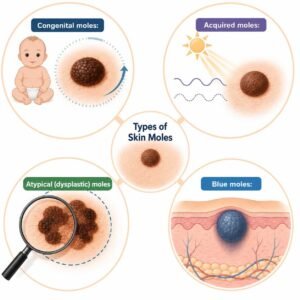
Types of Skin Moles
Not all moles are the same, and knowing the difference helps you understand why your doctor may treat one mole differently from another.
- Congenital moles: Present from birth. Usually larger and need regular monitoring as the child grows.
- Acquired moles: Develop later in life, often during teenage years or pregnancy, due to sun exposure or hormonal shifts. These are the most common types.
- Atypical (dysplastic) moles: Larger, irregular in shape or color. They are usually harmless but need closer monitoring, since they can sometimes resemble early skin cancer.
- Blue moles: Deeper in the skin, giving them a bluish-grey color. Usually harmless.
Your doctor will identify the type during your consultation before suggesting the right removal method.
When Should You Actually Remove a Mole?
There are two simple reasons people remove moles: cosmetic and medical.
Cosmetic reasons are about appearance and comfort. Maybe the mole sits where your collar rubs against it daily, or it is on your face and affects how you feel about your photos.
Medical reasons are more serious. Doctors use something called the ABCDE rule to spot moles that need a closer look:
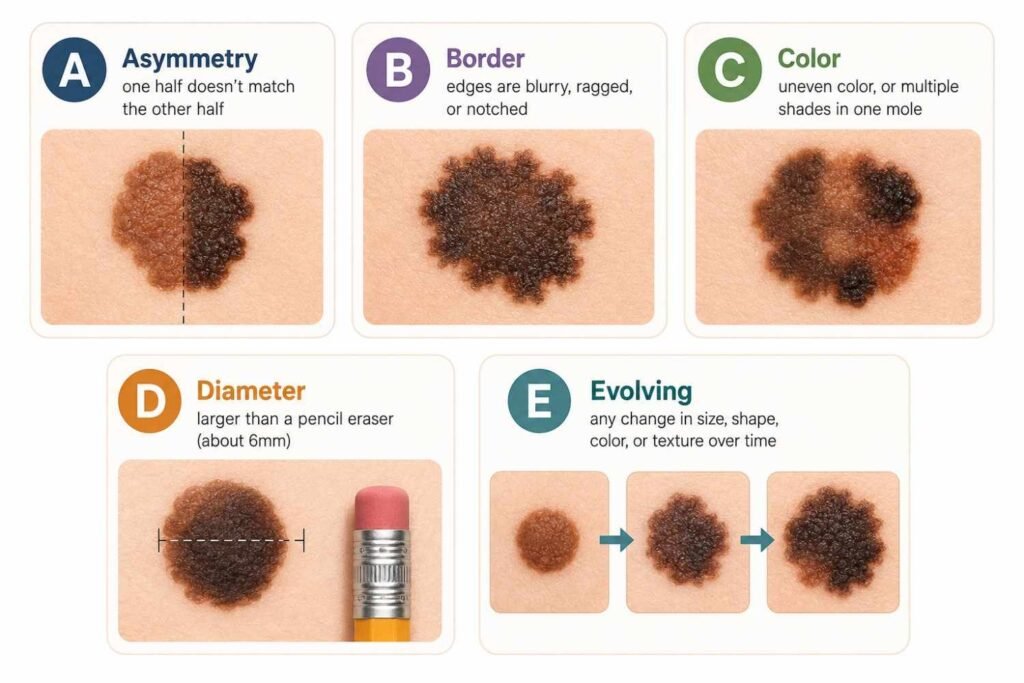
- Asymmetry – one half doesn’t match the other half
- Border – edges are blurry, ragged, or notched
- Color – uneven color, or multiple shades in one mole
- Diameter – larger than a pencil eraser (about 6mm)
- Evolving – any change in size, shape, color, or texture over time
If your mole shows any of these signs, please don’t wait for a routine visit. Book a check-up soon. Most moles are harmless, but it’s always better to have a doctor confirm it.
How Does Mole Removal Treatment Work?
A mole removal visit is usually simple and quick. Here is what to expect, step by step:
- Consultation and examination: Your doctor looks at the mole, sometimes using a magnifying tool called a dermato-scope, to understand its type and depth.
- Choosing the method: Based on size, depth, and location, your doctor recommends laser, shave, surgical excision, or radiofrequency (RF) treatment.
- Numbing the area: A local anesthetic is applied so you feel little to no pain.
- The procedure: Depending on the method, the mole is either vaporized with a laser, shaved level with the skin, cut out and stitched, or treated with gentle RF energy.
- Aftercare instructions: You’re given simple care steps to support healing and reduce scarring.
The right method depends entirely on your mole. Here’s a quick comparison:
| Method | Best For | What to Expect |
|---|---|---|
| Laser Removal | Small, flat, surface-level moles | Quick, virtually painless, minimal to no scarring |
| Shave Excision | Small, raised moles | Mole is shaved level with the skin using a fine blade |
| Surgical Excision | Larger or deeper moles, or moles that need testing | Mole is cut out, and the skin is closed with fine stitches |
| Radiofrequency (RF) | Raised or fibrous moles | Uses gentle energy waves, good healing, and low scarring |
Risks and Benefits of Mole Removal
Like any procedure, mole removal has both sides, and it helps to know them before you decide.
Benefits:
- Improved appearance and confidence
- Relief from irritation, itching, or repeated bleeding caused by friction
- Early detection of skin cancer, since removed moles can be tested if needed
- A quick, low-downtime procedure compared to most cosmetic treatments
Risks:
- A small chance of scarring, especially with surgical excision
- Temporary changes in skin color around the treated area
- A low risk of infection if aftercare instructions aren’t followed
- Rarely, partial regrowth if some pigment cells remain
Choosing an experienced doctor and following aftercare advice keeps these risks low.
Safety and Permanence
Mole removal is a safe and routine procedure when done by a trained professional. A local anesthetic numbs the area first, so you will feel little to no pain during treatment. You may feel mild discomfort once the numbness wears off, like a small cut or scrape. If a mole looks unusual, it’s sometimes sent for a quick lab test after removal. This is standard practice and nothing to worry about.
As for permanence, in most cases, the mole does not grow back, especially when removed through surgical excision. With laser or shave methods, there’s a small chance some pigment cells remain, and the mole can very slightly reappear over months or years. This is uncommon, and your doctor will guide you on the right method to lower that chance based on your mole type.
What Does Recovery Look Like?
Recovery is usually quick and simple. Here is a general timeline:
- Day 1–2: The area may look slightly red or feel tender. Keep it clean and dry.
- Day 3–7: A small scab may form. Do not pick at it, let it fall off naturally.
- Week 2–4: Skin continues to heal and settle. Any redness fades gradually.
- After healing: Protect the area from direct sun for a few weeks to avoid dark spots forming on the new skin.
If stitches were used, they are usually removed within 7 to 10 days, depending on the location.
Mole Removal Cost in Ahmedabad
The cost of mole removal in Ahmedabad depends on a few things: the size of the mole, the method used, how many moles you are removing, and the location on your body. As a general guide, simple laser or shave removal tends to be more affordable, while surgical excision with stitches and lab testing costs a bit more.
During your consultation, your doctor will give you a clear, upfront cost estimate based on your specific case, with no guesswork involved. If you are also exploring other facial cosmetic treatment in ahmedabad options, it often makes sense to discuss them together on one visit.
Mole Removal vs. Wart Removal: What’s the Difference?
People often mix these up, but they are not the same thing. Moles are clusters of pigment cells and are not contagious. Warts are caused by a virus (HPV) and can spread through touch. Both can be removed using similar techniques, such as laser or excision, but a doctor will examine which one you have before deciding on treatment. If you’d like to read more, we’ve covered related skin concerns in our post on non-surgical skin treatments.
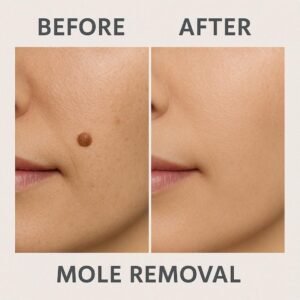
Why Choose Face Multispecialty Hospital for Mole Removal?
Dr. Stuti Bajaj brings a Fellowship in Medical Cosmetology from Germany, along with years of hands-on experience treating skin concerns at our clinic in Face Multispecialty Hospital Ambawadi, Ahmedabad. Being a dual-specialty hospital, we combine careful medical evaluation with a gentle, patient-first approach so you always know what’s happening and why.
We also use sterile, modern equipment for every procedure, which keeps infection risk very low and supports faster healing. And because removal techniques like laser and RF are also used for other skin concerns, our team has deep, practical experience reading skin and choosing what’s right for it. For example, see our guide on how to remove a tattoo permanently for a related look at laser-based skin procedures.
Conclusion
Whether your mole is a small cosmetic concern or something you want checked for peace of mind, you don’t have to figure it out alone. A quick consultation can tell you exactly which removal method suits your skin, what it will cost, and what recovery will feel like. If you’re ready to take the next step, contact us at Face Multispeciality Dental & Cosmetology Hospital or call us directly at +91 91573 23838 to book your appointment.
Book Your Appointment Today
Get expert dental care with Dr. Stuti Bajaj. Click here to schedule your consultation now.
Frequently Asked Questions
Q: Does mole removal hurt?
A: No, not during the procedure. A local anesthetic numbs the area first, so most patients feel only mild pressure. Some tenderness is normal for a day or two after.
Q: How many sessions does mole removal need?
A: Most moles are removed in a single session. Larger or deeper moles, or laser treatment on certain mole types, may need a follow-up session for complete results.
Q: Will mole removal leave a scar?
A: Some methods carry a small chance of a faint mark, especially with surgical excision. Choosing the right method for your mole type and following aftercare instructions keeps scarring to a minimum.
Q: Can I remove a mole at home?
A: No, home removal is not safe. It increases the risk of infection, scarring, and missing early signs of a problematic mole. Always have it checked and removed by a trained professional.
Q: How soon will I see results?
A: You will notice the mole is gone right after the procedure. Full healing of the surrounding skin usually takes two to four weeks, depending on the method used.
