
Monsoon Skin Care Guide: How to Transition from Summer (Dermatologist Tips)
The first rain of the season feels almost magical—especially after months of Ahmedabad’s intense summer heat. But while you step out to enjoy those cool showers, your skin is quietly dealing with one of the most confusing transitions of the year. This is exactly why following a proper monsoon skin care routine in Ahmedabad becomes so important.
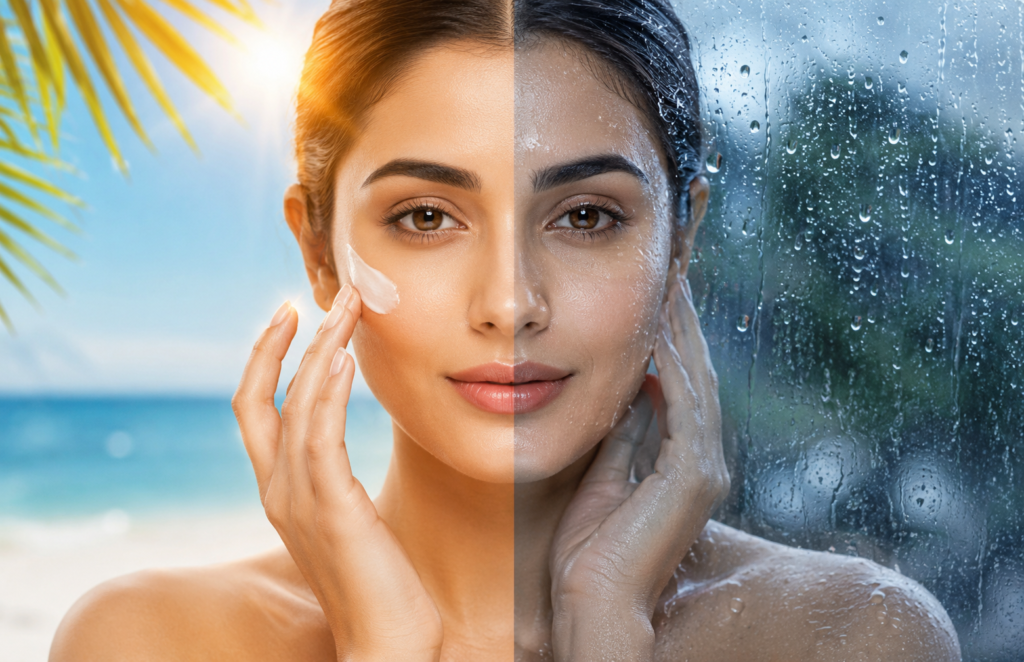
June in Ahmedabad is truly a weather paradox. The temperature drops slightly, but humidity rises sharply, often jumping from 30–40% to over 80% within just a few days. Your skin, already tired from battling UV rays, heat, and dust, suddenly faces a new challenge, moisture-heavy air that clogs pores, traps sweat, and creates the perfect environment for breakouts, fungal infections, and dullness.
The good news? With a few smart changes to your skincare routine, you can protect and even improve your skin during this seasonal shift. In this blog, I’ll walk you through exactly what happens to your skin during this transition, the five essential changes you should make before monsoon fully sets in, and the common mistakes I see patients make every year at our Face Multispeciality Hospital.
Why June–July Is the Most Challenging Time for Your Skin in Ahmedabad
Most people think monsoon is a relief for the skin care in Ahmedabad. Dermatologists see a significant spike in skin concerns every year as the season changes, and it is almost always because people are still following their summer routine in a monsoon environment.
Here is what actually happens to your skin during this seasonal shift—and why adjusting your monsoon skin care routine Ahmedabad becomes so important:
Oil production goes into overdrive: Humidity in the air confuses your sebaceous glands. Even people with naturally dry skin may notice increased oiliness by midday. This excess sebum, combined with sweat and environmental pollution, clogs pores quickly and leads to blackheads and sudden acne flare-ups.
Your skin barrier becomes vulnerable: Constant switching between air-conditioned interiors and humid outdoor conditions can weaken your skin’s natural barrier. As a result, you may experience increased sensitivity, redness, and irritation—even from products that previously suited your skin.
UV rays do not disappear: One of the biggest monsoon skincare myths is that cloudy skies protect you from sun damage. In reality, up to 80% of UV rays can still penetrate through clouds. Skipping sunscreen during this season often leads to stubborn pigmentation issues later on.
Fungal infections become more likely: Ahmedabad’s humid monsoon climate creates the perfect environment for fungal growth, especially in areas like underarms, skin folds, and between toes. This is not just a hygiene concern—it’s a dermatological issue that may need proper medical care.
5 Essential Switches for Your Monsoon Skin Care Routine Ahmedabad
1. Switch From a Cream Cleanser to a Gel or Foam Cleanser
The rich, nourishing cleansers that felt great in winter and even in dry summer are now likely to leave a residue on your skin during the monsoon. As part of your monsoon skin care routine Ahmedabad, switching to gel-based or mild foaming cleansers helps clear excess oil and sweat without stripping your skin’s natural moisture.
Look for cleansers with salicylic acid if you are acne-prone, or oat extract or ceramides if your skin is sensitive. Cleanse twice daily, morning and night, but resist the urge to wash more often than that. Over-cleansing triggers your glands to produce even more oil.
What to avoid: Strong alcohol-based cleansers, harsh scrubs, and any product that leaves your skin feeling “squeaky clean.” That tight feeling means your barrier has been disrupted.
2. Swap Your Heavy Moisturizer for a Lightweight Gel Moisturizer
This is the switch most people skip, and it causes the most problems. A thick cream moisturizer that hydrates beautifully in dry weather will now sit on top of your skin, mix with excess oil, and clog your pores.
Switch to a water-based or gel moisturizer. Ingredients like hyaluronic acid, niacinamide, and aloe vera are your best friends this season. They hydrate without heaviness and help regulate oil production over time—an important part of a balanced monsoon skin care routine Ahmedabad.
Here is something many patients do not know: even oily skin needs moisturizer during the monsoon. When the skin becomes dehydrated, which happens easily due to air-conditioning, it overproduces oil to compensate. A lightweight moisturizer helps control shine.
3. Do Not Abandon Sunscreen. Change It
Sunscreen is the one step that must stay, no matter what the sky looks like. What should change is the formula.
If you are using thick SPF cream in summer, switch to a water-resistant, gel-based, or fluid sunscreen with at least SPF 30 (ideally SPF 50+). Gel sunscreens feel lighter on sweaty, humid skin and are far less likely to cause breakouts.
Apply sunscreen every morning and reapply after 2–3 hours if you are outdoors. Skipping it for a few rainy weeks is how pigmentation problems like melasma and post-inflammatory hyperpigmentation get worse and become very difficult to treat.
4. Simplify Your Routine and Reduce Active Ingredients
Monsoon is not the time to experiment with strong active ingredients. The skin is already under stress from the seasonal change. Adding retinoids, high-concentration vitamin C serums, or strong AHAs at this point can trigger irritation, peeling, and increased sensitivity.
Instead, focus on a simple, stable routine: a gentle cleanser, a lightweight moisturizer, and good sunscreen. If you want to add a treatment step, niacinamide (at 5–10%) is excellent for controlling oil, reducing redness, and improving skin texture.
If you are already on a prescription skincare regimen from a dermatologist, do not stop it without consulting your doctor. But do mention the seasonal change at your next appointment so the routine can be adjusted if needed.
5. Add a Weekly Clay Mask and Keep Skin Folds Dry
Once a week, a kaolin or bentonite clay mask can do wonders for congested, pore-clogged monsoon skin. It draws out excess oil, clears impurities, and helps reduce the appearance of enlarged pores. Limit it to once a week; more frequent use can dry out the skin.
Outside of your face, pay attention to skin folds—underarms, behind the knees, inner elbows, and under the bust. These are prime spots for fungal infections. Keeping them clean and dry is an often overlooked but essential part of any monsoon skin care routine Ahmedabad.
Common Monsoon Skin Care Mistakes to Avoid in Ahmedabad
After treating patients through several monsoon seasons in Ahmedabad, I have noticed the same mistakes repeat themselves every year:
Over-exfoliating: People assume that if their skin feels congested, more scrubbing will help. It does the opposite; it strips the barrier, increases sensitivity, and makes breakouts worse. Limit chemical exfoliation (BHA or AHA) to once a week and stop physical scrubbing entirely during the monsoon.
Skipping moisturizer because skin feels oily: Oily skin is not the same as hydrated skin. Skipping moisture makes the skin produce even more oil. Always apply lightweight gel moisturizer after cleansing.
Using the same heavy products from summer or winter: Product formulation matters. What worked when the air was dry will not work when the humidity is high. Seasonal adjustment is not about buying everything new; it is about switching a few key products smartly.
Ignoring new or worsening skin issues: If you notice a sudden rash, a different pattern of breakouts, or white/pink patches appearing, these are signs that something more is going on: a fungal infection, an allergic reaction, or a skin condition that needs professional attention. Do not wait for it to resolve on its own.
When Should You See a Dermatologist or Cosmetologist?
While a good at-home routine can manage most seasonal skin changes, some situations need a little more attention:
- Sudden breakouts that are different in size, texture, or location from your usual acne
- Redness, itching, or scaling that does not improve in 3–4 days
- Dark patches or pigmentation that appear or worsen quickly
- Any signs of fungal infection (circular patches, intense itching, white residue)
- Skin that feels unusually sensitive or reactive to products you have used before
At Face Multispecialty Dental & Cosmetology Hospital in Ambawadi, Ahmedabad, we offer pre-monsoon consultations to guide you through the right changes in your monsoon skin care routine Ahmedabad, based on your skin type and concerns. From HydraFacial and mild chemical peels to targeted pigmentation treatments, we help you choose the right care at the right time for the best results
Quick Pre-Monsoon Checklist for Healthy Skin in Ahmedabad
Before the rain fully arrives, run through this list:
- Switched to a gel or foam cleanser
- Replaced heavy moisturizers with a lightweight gel formula
- Using a water-resistant, gel-based SPF 30–50+ sunscreen
- Paused any harsh active ingredients (strong retinoids, high-dose AHAs)
- Added a weekly clay mask to the routine
- Keeping skin folds clean and dry
- Booked a pre-monsoon skin consultation if experiencing ongoing concerns
Final Thoughts
Your skin does not need a 10-step overhaul every time the season changes. What it really needs is awareness of what is happening and why. The summer-to-monsoon transition in Ahmedabad is one of the most noticeable shifts your skin goes through all year, and following a simple monsoon skin care routine Ahmedabad can help you stay fresh and glowing right through September.
If you are unsure about which products or treatments are right for your skin type this season, our team at Face Multispecialty Dental & Cosmetology Hospital is here to help. Book a consultation with Dr. Stuti Bajaj and walk into monsoon with skin that is ready for anything.
Related Treatments at Our Clinic
This blog is written for informational purposes only and does not replace professional medical consultation. Please consult Dr. Stuti Bajaj or a qualified dermatologist, for personalized advice.
Book Your Appointment Today
Get expert dental care with Dr. Stuti Bajaj. Click here to schedule your consultation now.
