
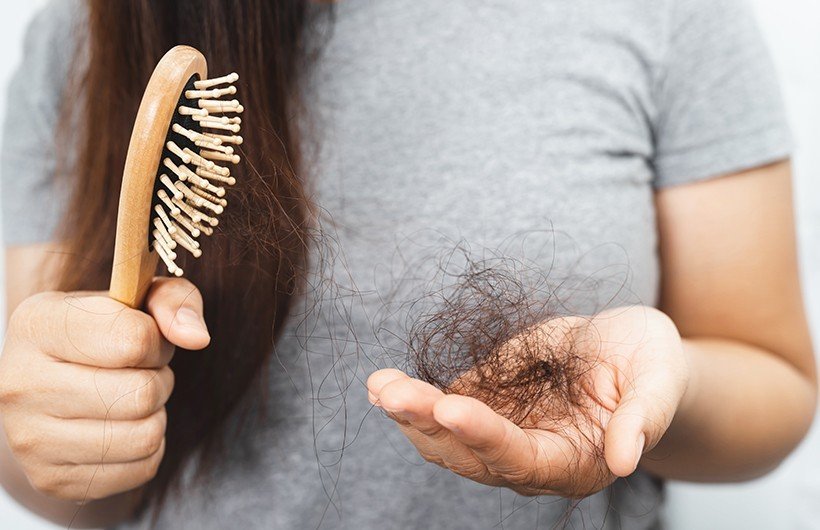
Hair Fall: Real Causes & Treatment
At Face Multispeciality Dental & Cosmetology Hospital in Ambawadi, Ahmedabad, hair fall is one of the concerns we see across almost every age group — and it’s also one of the most confusing for patients, because so many causes look identical on the surface but need completely different treatments. In our experience, the biggest mistake patients make is trying one generic remedy for months before coming to us, when the actual cause could’ve been identified and addressed much earlier.
Losing 50-100 strands a day is completely normal. What we actually look for is a pattern — thinning at the crown, a receding hairline, sudden patchy loss, or a general increase in shedding that lasts more than a few weeks. Here’s how we approach it.
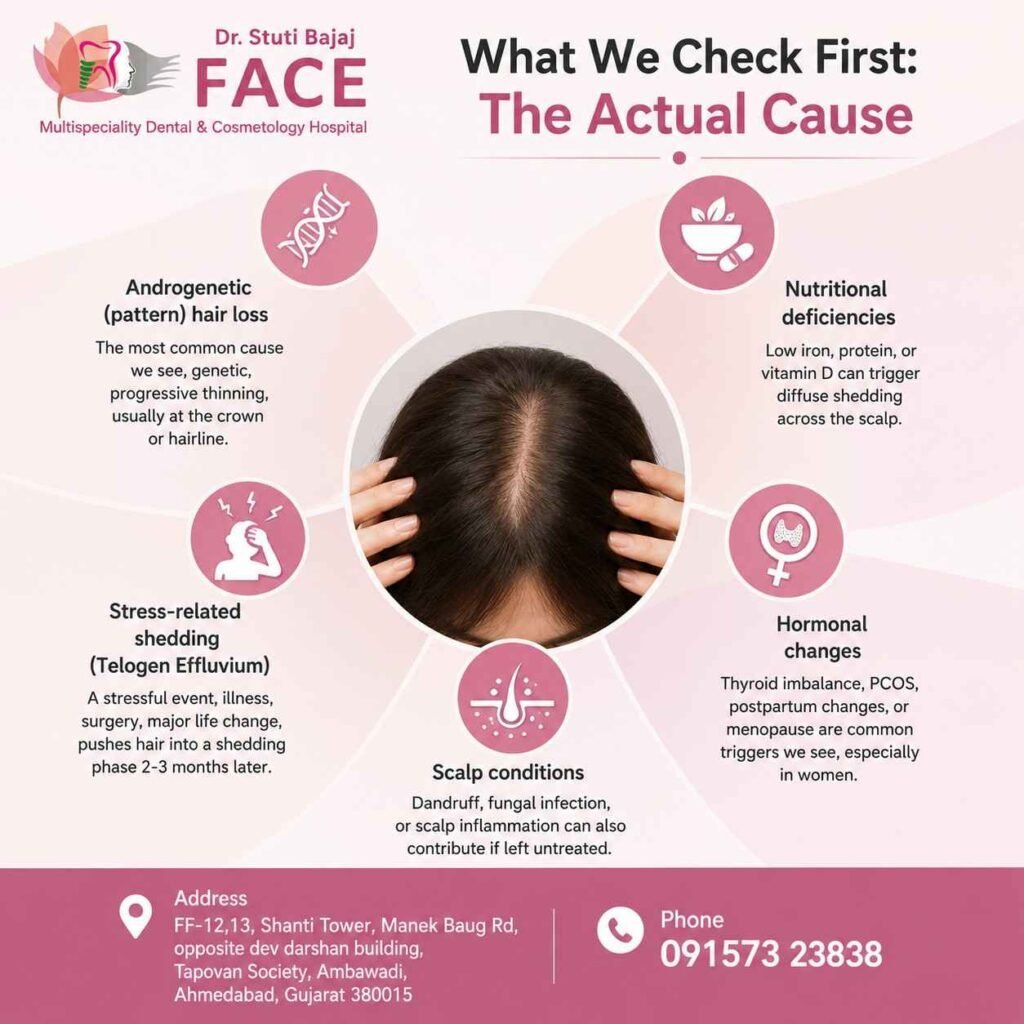
What We Check First: The Actual Cause
Before we recommend any treatment, we assess what’s driving the hair fall, because the same visible symptom can come from very different roots:
- Androgenetic (pattern) hair loss: The most common cause we see — genetic, progressive thinning, usually at the crown or hairline.
- Nutritional deficiencies: Low iron, protein, or vitamin D can trigger diffuse shedding across the scalp.
- Stress-related shedding (Telogen Effluvium): A stressful event — illness, surgery, major life change — pushes hair into a shedding phase 2-3 months later.
- Hormonal changes: Thyroid imbalance, PCOS, postpartum changes, or menopause are common triggers we see, especially in women.
- Scalp conditions: Dandruff, fungal infection, or scalp inflammation can also contribute if left untreated.
This is exactly why we don’t jump straight to a treatment plan without understanding which of these is actually at play for a given patient.
What Home Remedies Can (and Can’t) Do
We’re often asked about onion juice, coconut oil, aloe vera, and similar home remedies. Our honest take: some of these genuinely improve scalp health and reduce breakage, which can make hair look and feel fuller. But if the underlying cause is genetic, hormonal, or nutritional, no amount of oiling will reverse it — we’ve seen many patients spend months on home remedies for pattern hair loss specifically, which almost never responds to topical home treatments alone.
When We Recommend Seeing Us
- Shedding that’s noticeably increased and lasted more than 6-8 weeks
- Visible thinning at the crown or a receding hairline
- Sudden patchy bald spots
- Hair fall alongside other symptoms (fatigue, irregular periods, weight changes) — this often points to a hormonal cause worth investigating
Treatment Options We Offer
- PRP Therapy: We draw a small amount of your blood, process it to concentrate growth factors, and inject it into the scalp to stimulate hair follicles. Works well for early-stage thinning and pattern hair loss, usually needs multiple sessions spaced a few weeks apart.
- Medical/topical treatments: For deficiency-driven or hormonal cases, we often start here alongside addressing the root cause (supplementation, hormone management).
- Hair Transplant (FUE/DHI): For more advanced hair loss where follicles in the affected area have stopped functioning, transplant moves healthy follicles from a donor area. This is a more involved procedure but gives permanent results in the transplanted area. We’ve written in more detail about choosing between FUE and DHI if you’re at the stage of comparing these two techniques.
Many patients actually do best with a combination — PRP alongside a transplant for overall scalp health, or PRP alone if caught early enough that a transplant isn’t yet necessary.
How Long Until You See Results?
PRP typically shows visible improvement (less shedding, some new growth) after 3-4 sessions, spread over a couple of months. Transplant results take longer to mature — new hair typically starts growing around 3-4 months post-procedure, with fuller results visible by 8-12 months. We set realistic expectations with every patient upfront, since this is one area where patience genuinely matters more than most people expect.
Preventing Further Hair Fall
- Avoid tight hairstyles that pull on the scalp
- Don’t skip a balanced diet — protein and iron deficiency show up in hair health quickly
- Manage scalp conditions (dandruff, itchiness) early rather than ignoring them
- Reduce harsh chemical treatments and excessive heat styling
- Get a thyroid or hormone panel checked if hair fall is sudden and unexplained
What Happens at a Consultation With Us
When you come to us for hair fall, Dr. Bajaj examines your scalp pattern, asks about recent health changes, and — where relevant — may suggest blood work to rule out deficiencies or hormonal causes before recommending PRP, medical management, or transplant. No two hair fall cases get the same treatment plan from us.
At Face Multispeciality Dental & Cosmetology Hospital, our PRP Therapy and Hair Transplant & Therapy treatments are tailored based on what’s actually causing your hair loss, not a one-size-fits-all protocol.
Meet Dr. Stuti Bajaj | Dental & Skin Specialist in Ahmedabad
At Face Multispeciality Dental & Cosmetology Hospital, we combine clinical expertise with modern treatment options to provide personalized care for skin, hair, dental, and cosmetic concerns
Frequently Asked Questions
Does hair fall of 50-100 strands a day normal?
Yes, that’s within the normal daily shedding range. It’s a sustained increase or visible thinning pattern that signals something worth investigating.
Can hair fall be reversed completely?
It depends on the cause. Nutritional or stress-related shedding often reverses once the underlying issue is addressed. Genetic pattern hair loss can be slowed and improved with treatment but isn’t something that reverses on its own.
Is PRP painful?
Most patients tolerate it well; we use numbing measures to keep discomfort minimal during the procedure.
How do I know if I need PRP or a transplant?
It depends on how advanced the hair loss is and whether follicles in the affected area are still active, this is best assessed during an in-person scalp examination.
Does stress really cause hair fall?
Yes, a stressful event can trigger a shedding phase 2-3 months later, which often resolves on its own once the stress passes, though it can benefit from supportive treatment.
This article is for general information only and is not a substitute for personal medical advice. Please consult a doctor in person for a diagnosis and treatment plan suited to your condition.
