

Wisdom Tooth Extraction in Ahmedabad: Signs, Cost & Recovery
Wisdom teeth usually make their appearance between the ages of 17 and 25, and for many people, that’s when the trouble starts. At our Dental Clinic in Ahmedabad, Dr. Stuti Bajaj (BDS, MDS) sees patients almost every week asking the same question: “Does this really need to come out, or can I just wait it out?” The honest answer is that not every wisdom tooth causes problems, but when one does, ignoring it can lead to bigger issues down the line.
This guide walks you through the signs that mean it’s time to get it checked, what the extraction involves, what it costs of Wisdom Tooth Extraction in Ahmedabad, and how recovery typically goes.
Why Wisdom Teeth Cause Problems in the First Place
By the time wisdom teeth try to erupt, your jaw has usually already finished growing, and there often isn’t enough room left for them. This can cause the tooth to come in at an angle, get stuck partway (impacted), or push against the molar next to it. None of this is dangerous on its own, but it creates the conditions for pain, infection, and damage to nearby teeth if left unaddressed.
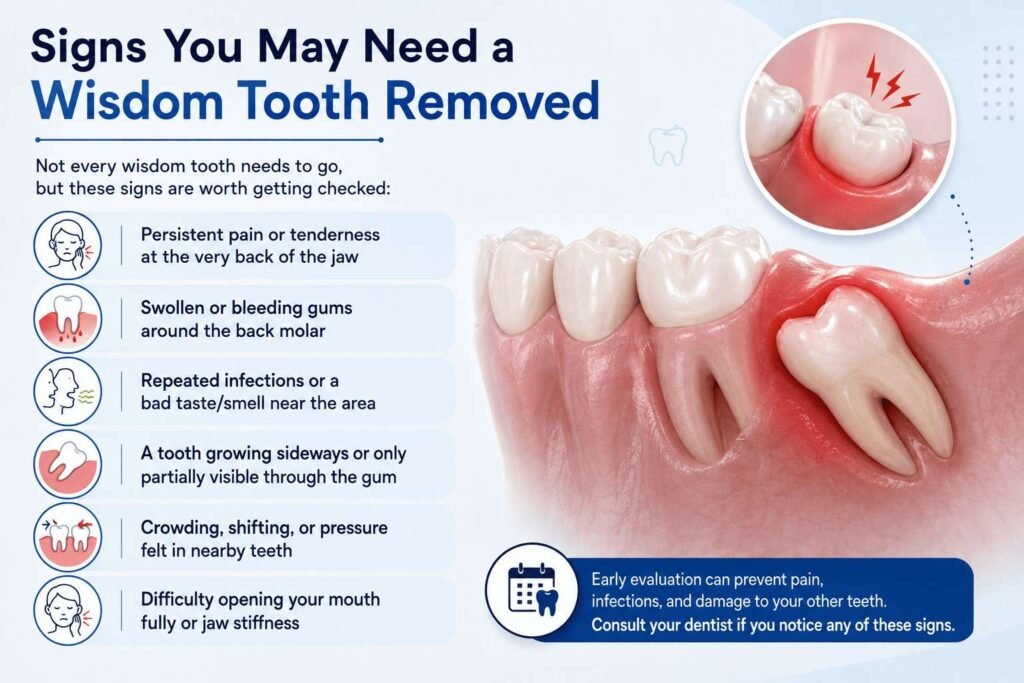
Signs You May Need a Wisdom Tooth Removed
Not every wisdom tooth needs to go, but these signs are worth getting checked:
- Persistent pain or tenderness at the very back of the jaw
- Swollen or bleeding gums around the back molar
- Repeated infections or a bad taste/smell near the area
- A tooth growing sideways or only partially visible through the gum
- Crowding, shifting, or pressure felt in nearby teeth
- Difficulty opening your mouth fully or jaw stiffness
If you’re noticing any of these, it’s worth getting an X-ray rather than waiting for the pain to pass on its own, impacted wisdom teeth rarely resolve by themselves.
What the Extraction Procedure Involves
Wisdom tooth extraction is done under local anaesthesia, so you won’t feel pain during the procedure itself. There are two broad types:
- Simple extraction: For a wisdom tooth that has fully erupted and is accessible, this is quick and straightforward.
- Surgical extraction: For impacted or partially erupted teeth, where the gum needs to be opened and sometimes a small amount of bone removed to access the tooth. This takes a little longer but is still done comfortably under local anaesthesia.
Comfort and efficiency guide how we approach every procedure at the clinic — the same philosophy behind our Single Sitting Root Canal treatments.
An X-ray beforehand helps determine which category your case falls into, and whether the tooth is positioned near any nerves that need extra care during removal. If the idea of any dental procedure makes you uneasy, you’re not alone — we’ve written about how we help patients manage this in Struggling with Dental Anxiety.
Wisdom Tooth Extraction Cost in Ahmedabad
Cost depends mainly on how complex the extraction is:
- Simple extraction: Typically, on the lower end of the range, for a tooth that’s fully visible and easy to access
- Surgical/impacted extraction: Priced higher, since it involves more time, sometimes minor bone removal, and stitches
The exact cost also depends on whether sedation is needed, the number of teeth being removed in one sitting, and any pre-procedure X-rays. The only way to get an accurate quote is a clinical evaluation with X-rays, avoid comparing prices without first knowing which category your case falls into.
Recovery: What to Expect
Most patients are back to their normal routine within a few days, though full healing of the gum tissue takes a couple of weeks. Here’s a general timeline:
- First 24 hours: Mild swelling and tenderness are normal. Stick to soft, cool foods and avoid rinsing vigorously.
- Days 2–3: Swelling usually starts to settle. Pain relievers and gentle salt-water rinses help.
- First week: Stitches (if placed) may dissolve on their own or need a quick follow-up visit for removal.
- 2–3 weeks: Full soft-tissue healing is usually complete.
If pain, swelling, or bleeding worsens instead of improving after the first couple of days, that’s a sign to come back in rather than wait it out.
Do You Always Need to Remove a Wisdom Tooth?
Not necessarily. If a wisdom tooth has erupted fully, is positioned normally, and you’re able to clean around it properly, your dentist may simply recommend monitoring it at your regular check-ups rather than removing it. This is exactly why a proper evaluation, not guesswork, should guide the decision.
Ready to Get It Checked?
If you’re dealing with pain, swelling, or a wisdom tooth that’s growing in awkwardly, Dr. Stuti Bajaj can evaluate it and walk you through the right next step. Book a consultation or learn more on our Teeth Extraction treatment page.
Meet Dr. Stuti Bajaj | Dental & Skin Specialist in Ahmedabad
At Face Multispeciality Dental & Cosmetology Hospital, we combine clinical expertise with modern treatment options to provide personalized care for skin, hair, dental, and cosmetic concerns
Frequently Asked Questions
At what age do wisdom teeth usually need to be removed?
Most extractions happen between the late teens and mid-20s, since the tooth roots aren’t fully formed yet and recovery tends to be easier at this stage, but wisdom teeth can be extracted at any age if they’re causing problems.
Is wisdom tooth extraction painful?
The procedure itself is done under local anaesthesia, so you won’t feel pain during removal. Some soreness and swelling afterward is normal and manageable with medication.
How long does recovery take?
Most people resume normal activity within a few days, with full soft-tissue healing over about 2–3 weeks.
Can I get all four wisdom teeth removed at once?
Yes, this is common and can be discussed at your consultation, it depends on your comfort level and the complexity of each tooth’s position.
Disclaimer: This article is for general informational purposes only and is not a substitute for professional dental advice, diagnosis, or treatment. Whether a wisdom tooth needs to be removed can only be determined after an in-person evaluation and X-ray with a qualified dentist.
