
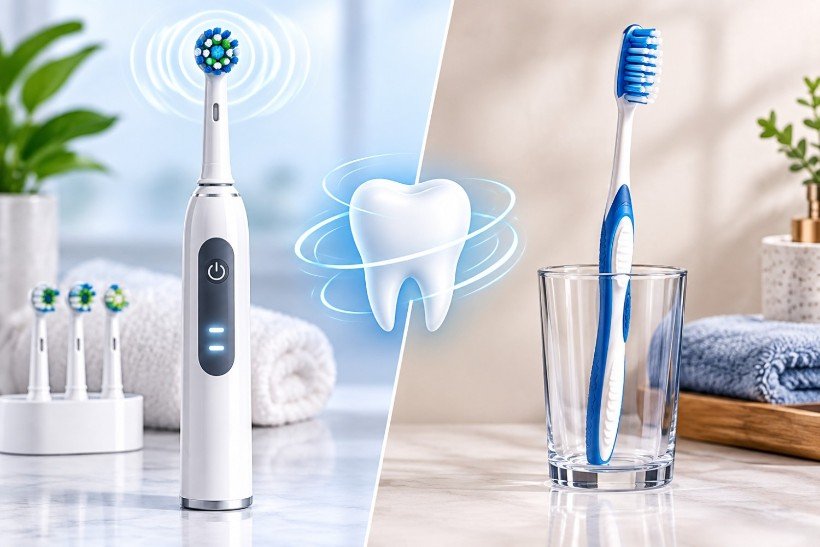
Electric vs Manual Toothbrush: What We Actually Tell Patients
Patients at our dental clinic in Ambawadi, Ahmedabad ask us the electric toothbrush vs manual toothbrush question almost every week, usually holding up their phone with an ad on screen. Here’s what we actually tell them, and it’s rarely a simple yes or no.
We don’t look at your brush first. We look at your gums.
The Check We Actually Do
At a checkup, before we even ask what brush you use, we look at three things: how much plaque has built up along the gumline, whether your gums bleed on light probing, and whether we can see wear patterns from brushing too hard. That tells us far more than the brush type ever could.
If plaque is minimal and gums look healthy, we don’t tell that patient to switch. Whatever they’re doing is working. If we see plaque sitting along the gumline in the same spots every visit, that’s usually a technique problem, and an electric brush often fixes it faster than trying to correct technique on a manual brush.
What the Research Actually Shows
A Cochrane review covering 56 studies found oscillating-rotating electric brushes reduced plaque by 21% and gingivitis by 11% more than manual brushing after three months. That’s a real, measurable difference. It’s also smaller than most electric toothbrush marketing implies, and it narrows further for patients who already brush correctly for the full two minutes with proper technique.
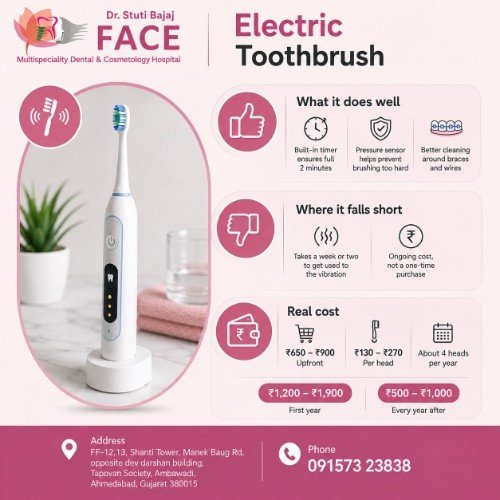
Electric Toothbrush
What it does well: Built-in timers help patients actually brush the full two minutes, which most people underestimate without one. Pressure sensors catch patients who brush too hard, which we see often at checkups. For braces patients, the oscillating motion reaches around brackets and wires more consistently than a manual brush.
Where it falls short: It’s a habit shift for the first week or two, the vibration feels odd to first-time users, and it’s an ongoing cost, not a one-time purchase.
Real cost: An entry-level electric toothbrush in India runs about ₹650 to ₹900 upfront. Replacement heads cost roughly ₹130 to ₹270 each, and you’ll go through about 4 a year, adding ₹500 to ₹1,000 annually. First-year cost lands around ₹1,200 to ₹1,900, then roughly ₹500 to ₹1,000 every year after.
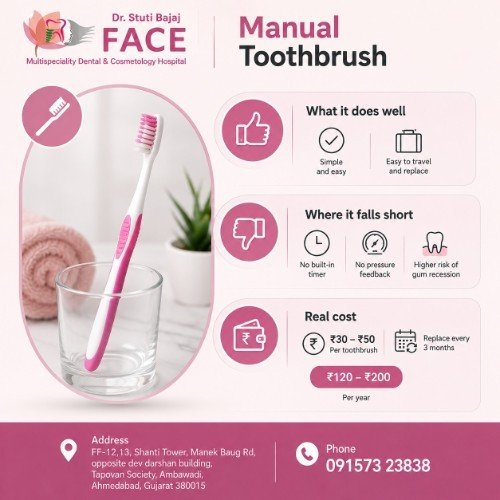
Manual Toothbrush
What it does well: Simple, no charging or batteries, works fine for patients who already have good technique and consistent habits. Easy to travel with and replace anywhere.
Where it falls short: No built-in timer, so most people underbrush without realizing it. No pressure feedback, and we see more gum recession in patients who brush hard with a manual brush than with an electric one. Technique matters more here, so results depend heavily on how well you were taught to brush.
Real cost: A manual toothbrush costs roughly ₹30 to ₹50 and should be replaced every 3 months, so about ₹120 to ₹200 a year. Far cheaper, but only pays off if your technique is already solid.
So Which One Actually Fits You
For a patient with braces or a technique issue we’ve coached on repeatedly with no improvement, the electric cost is worth it. For a patient with healthy gums, good technique, and no flags at their checkup, we tell them to save the money and stick with manual.
One Local Note for Ahmedabad
Whichever you use, stick to soft bristles. Between the dust in the city and how many patients here brush harder than they realize, we see more gum recession from hard bristles and heavy pressure than from choosing the wrong brush type entirely.
What Happens at Your Checkup
We check plaque and gum condition first, then talk about brush type only if it’s actually going to change something for you. Kids often need this conversation earliest, since building the right brushing habit matters more than which brush they start with, and it comes up regularly during Kids Dental Care visits.
Patients already in orthodontic treatment are the group we most consistently recommend electric to, given how much easier it makes cleaning around brackets. You can read more on this in our orthodontics benefits guide, which covers the broader treatment beyond just brushing.
Every recommendation Dr. Stuti Bajaj gives at Face Multispeciality Dental & Cosmetology Hospital is based on what she actually sees in your mouth at that checkup, not a blanket rule applied to every patient.
Meet Dr. Stuti Bajaj | Dental & Skin Specialist in Ahmedabad
At Face Multispeciality Dental & Cosmetology Hospital, we combine clinical expertise with modern treatment options to provide personalized care for skin, hair, dental, and cosmetic concerns
Frequently Asked Questions
Is an electric toothbrush worth the extra cost?
Depends on what your checkups show. If plaque and gum health are already good with a manual brush, the cost isn’t worth it. If technique has been a repeated issue, it usually is.
What toothbrush is best for kids?
Electric brushes with timers help many kids brush for the full two minutes, though a well-supervised manual routine works fine too, especially for very young children.
How often should I replace my toothbrush or brush head?
Every 3 months, or sooner if bristles look frayed. This applies to manual and electric brushes equally.
Can an electric toothbrush damage my gums?
Not if used correctly. Models with pressure sensors can actually help prevent the gum damage we more often see from manual brushing with too much force.
Is a manual toothbrush enough if I have braces?
It’s possible with careful technique, but in our reviews, patients with braces using manual brushes consistently show more plaque around brackets than those using electric.
Not sure what your checkup would actually show? Book a consultation or message us on WhatsApp.
This article is for general information only and is not a substitute for personal medical advice. Please consult a doctor in person for a diagnosis and treatment plan suited to your condition.
