
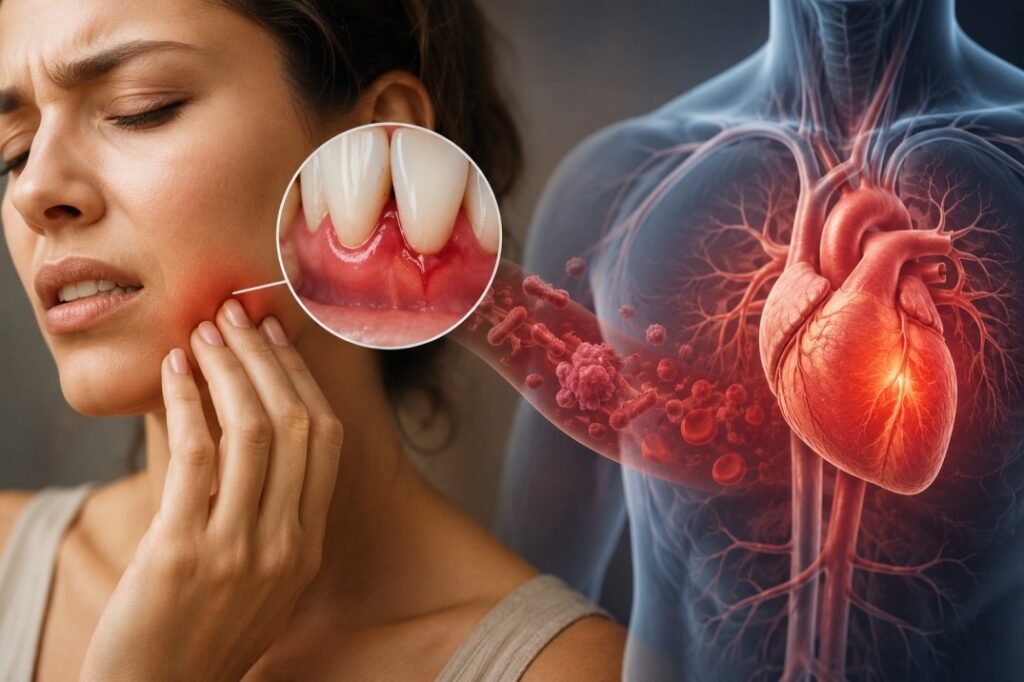
Can Gum Disease Increase Your Risk of Heart Disease?
Most people think of gum disease as a mouth problem a little bleeding when you brush, maybe some bad breath. But a wave of 2026 medical research is confirming what dentists have suspected for years: the infection sitting quietly in your gums doesn’t always stay in your mouth. According to Dr. Stuti Bajaj, BDS, MDS (Oral Pathology), at the best dental clinic in Ahmedabad, patients who dismiss bleeding gums as “normal” are often unknowingly carrying an inflammatory load that affects their heart, blood sugar, and overall health. This guide breaks down the science, the warning signs, and what you can do about it.
What Is the Oral-Systemic Health Connection?
Your mouth isn’t a separate system from the rest of your body it’s the entry point to it. When plaque bacteria build up along the gumline and are left untreated, they don’t just irritate gum tissue. They create an open wound beneath the gums that allows bacteria and inflammatory compounds to enter your bloodstream every time you chew or brush. Once in circulation, these bacteria and the inflammation they trigger have been associated with several chronic conditions far from the mouth. Dentists now refer to this as the oral-systemic connection, and it’s becoming one of the most talked-about topics in dentistry in 2026.
How Gum Disease Affects Your Heart
Chronic gum inflammation keeps your immune system in a low-grade state of alert. Over months and years, that constant inflammatory response can contribute to the buildup of arterial plaque, a known driver of heart attacks and strokes. Some of the same bacterial species found in infected gum pockets have also been detected in arterial plaque samples, suggesting the bacteria themselves may travel and settle in blood vessel walls. This doesn’t mean gum disease alone causes heart disease, but for patients who already carry cardiac risk factors, untreated periodontal infection is now considered an additional, modifiable one.
The Diabetes–Gum Disease Two-Way Street
The relationship between gum disease and diabetes runs in both directions. High blood sugar creates an environment where gum infections thrive and heal more slowly, while the chronic inflammation from gum disease makes it harder for the body to regulate insulin effectively. Patients with diabetes who also have untreated periodontal disease often struggle more with blood sugar control, and the reverse is true too, treating gum disease has been shown to improve glycemic markers in several clinical studies modestly. This is why a dentist who screens gum health is often the first to notice signs pointing toward undiagnosed prediabetes.
Silent Tooth Infections: What 2026 Research Is Revealing
One of the more striking developments this year involves deep, symptom-free infections around tooth roots, the kind that don’t hurt and often go unnoticed for years. Recent research has connected these hidden infections to disrupted insulin function and body-wide inflammation, even when the patient feels no dental pain at all. Separately, follow-up studies on root canal-treated patients have observed improvements in blood sugar regulation, cholesterol levels, and inflammatory markers after the infected tissue was removed. The takeaway for patients: “no pain” does not mean “no problem,” and routine dental imaging remains the only reliable way to catch these silent infections early.
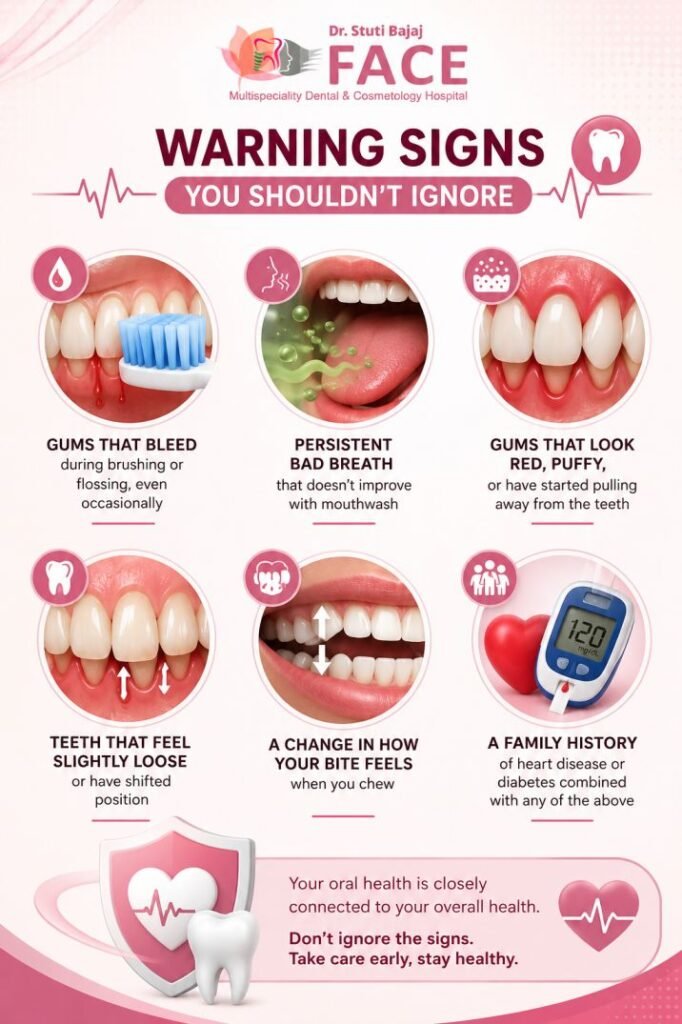
Warning Signs You Shouldn’t Ignore
- Gums that bleed during brushing or flossing, even occasionally
- Persistent bad breath that doesn’t improve with mouthwash
- Gums that look red, puffy, or have started pulling away from the teeth
- Teeth that feel slightly loose or have shifted position
- A change in how your bite feels when you chew
- A family history of heart disease or diabetes combined with any of the above
If you notice two or more of these, it’s worth booking an evaluation rather than waiting for pain to show up, since gum disease is frequently painless until it’s advanced.
How Face Multispecialty Diagnoses and Treats Gum Disease
At Face Multispecialty Dental & Cosmetology Hospital, every gum health evaluation starts with pocket-depth measurements and, where needed, digital imaging to check for bone-level infection that isn’t visible. For patients with early gingivitis, professional scaling and root planning is usually enough to reverse the condition. For more advanced periodontitis, Dr. Bajaj offers laser gum surgery, a minimally invasive option that removes infected tissue with less bleeding, less discomfort, and faster healing than traditional gum surgery, an approach increasingly preferred by patients who want effective treatment without a long recovery.
Prevention: A Simple Daily Protocol
- Brush twice daily for two minutes with a soft-bristled brush
- Floss once a day this is the step most people skip, and where most gum disease starts
- Use an antimicrobial or fluoride mouthwash to reduce bacterial load between meals
- Limit sugary and processed snacks, which feed the bacteria responsible for gum inflammation
- Don’t smoke is one of the strongest risk factors for periodontal disease
- Schedule a professional cleaning and gum check every six months, even if nothing feels wrong
Why Choose the Best Dental Clinic in Ahmedabad for Whole-Body Oral Care
Treating gum disease effectively means looking beyond the teeth to see how oral health connects to the rest of your body, which is exactly the approach Dr. Stuti Bajaj takes at the best dental clinic in Ahmedabad. With advanced diagnostic tools, laser-assisted treatment, and a comprehensive care philosophy that considers your heart and metabolic health alongside your smile, Face Multispecialty Hospital is built for patients who want more than quick cleaning they want a dentist who catches problems before they spread. If it’s been more than six months since your last checkup, there’s no better time to get evaluated.
Conclusion
Your gums are talking to the rest of your body whether you realize it or not. The good news is that gum disease is one of the most preventable and treatable conditions in dentistry the key is catching it early, before the inflammation has a chance to spread beyond your mouth. If you’ve noticed bleeding gums, bad breath, or simply haven’t had a checkup in a while, reach out to Dr. Stuti Bajaj at Face Multispecialty Dental & Cosmetology Hospital, , Ahmedabad, for a comprehensive evaluation. You can book an appointment here or message the clinic directly on WhatsApp to get started.
Let’s Find the Right Treatment for You
At Face Multispeciality Dental & Cosmetology Hospital, we combine clinical expertise with modern treatment options to provide personalized care for skin, hair, dental, and cosmetic concerns
Frequently Asked Questions
Can gum disease really cause heart disease?
Gum disease doesn’t directly cause heart disease, but the chronic inflammation and bacteria it introduces into the bloodstream are considered contributing factors, especially in patients who already have other cardiac risk factors.
Is gum disease reversible?
Early-stage gum disease (gingivitis) is usually fully reversible with professional cleaning and improved home care. Advanced periodontitis can’t be fully reversed but can be effectively controlled and stabilized with treatment like laser gum surgery.
How do I know if I have a silent tooth infection?
Since these infections often cause no pain, the only reliable way to detect them is through a dental X-ray during a routine checkup another reason six-monthly visits matter even when your teeth feel fine.
Does treating gum disease improve blood sugar?
Several clinical studies have shown modest improvements in blood sugar markers after periodontal treatment in diabetic patients, reinforcing the two-way relationship between the two conditions.
How often should I get a gum health check-up?
Every six months is the standard recommendation, though patients with diabetes, heart conditions, or a history of gum disease may benefit from more frequent visits.
Is laser gum surgery painful?
Most patients report significantly less discomfort with laser gum surgery compared to traditional methods, along with a shorter recovery period.
